

Your Surgery · Recovery
Daily Life During Recovery
Your surgeon sets your weight-bearing status and your recovery timeline, and they differ from patient to patient. Use this page to get your home ready, not as a schedule. When a question here depends on timing, ask Dr. Basmajian at your appointment.
Stairs, bathrooms, and help at home. Most patients manage daily life with a walker and a few inexpensive bathroom aids, and no live-in nurse.
The Practical Side
Most patients can manage daily life at home during limb lengthening recovery with a walker and a few inexpensive bathroom aids, and no live-in nurse. You will be up and moving with support within days. Stairs, the toilet, and showering are all doable with the right setup, which is easiest to arrange before surgery.
For the week-by-week clinical picture, visit the full recovery timeline page.
Will I be able to get up and down the stairs? What if I live in a two-story house?
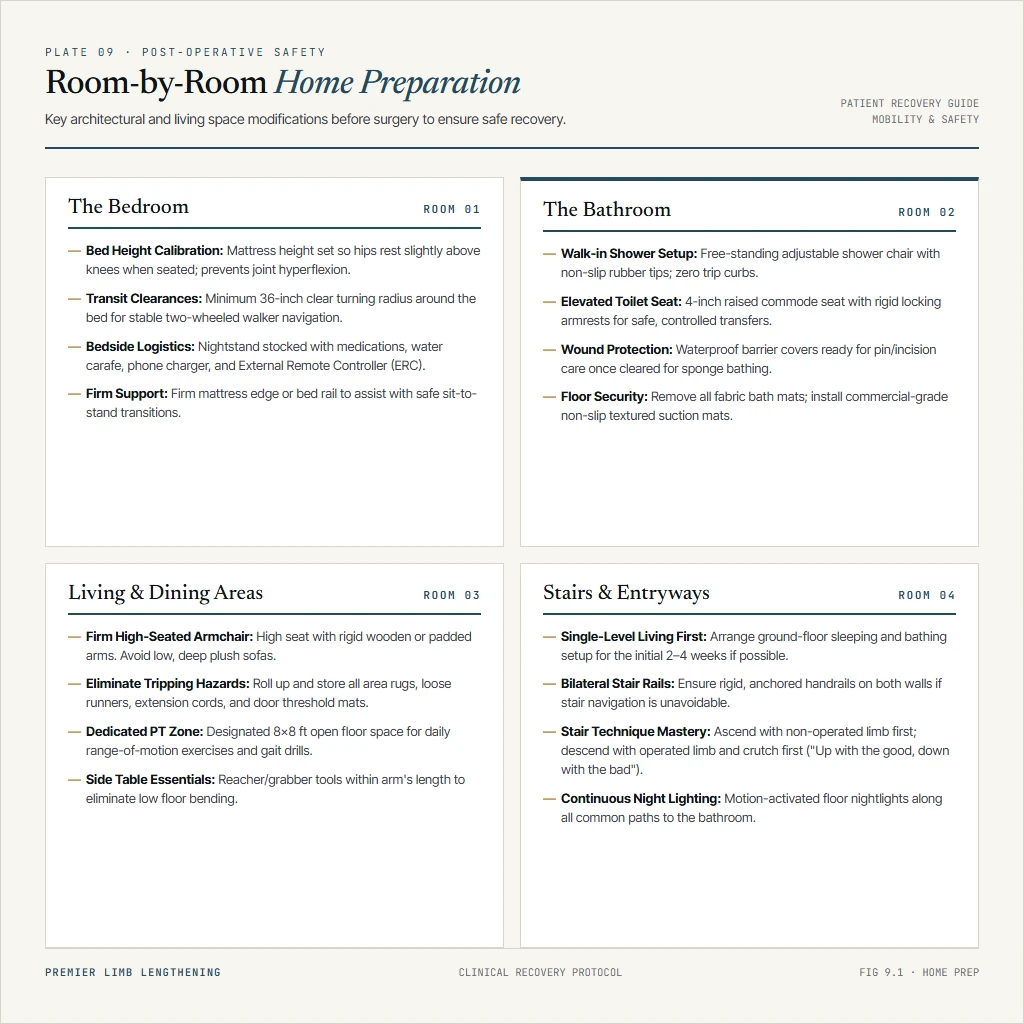
Yes, most patients handle stairs, and a two-story house is workable with a plan. Early on you take stairs slowly, one at a time, with a handrail and often a helper nearby for the first few days. The simplest setup is to plan to live on one level for the first week or two, with a bed, a bathroom, and everything you need on the same floor, then add stairs back as your strength returns. If your only bathroom is upstairs, we will talk through it before surgery.
How do I get on and off the toilet after surgery?
This is one of the most common questions, and the fix is simple and cheap. A raised toilet seat plus a grab bar and/or a bedside commode with arms lets you lower and lift yourself using your arms instead of your legs. Set it up before surgery so it is ready on day one. Most patients are independent in the bathroom quickly once the height and a handhold are sorted out.
How do I shower or bathe?
A shower chair or bench and a handheld showerhead are the two things that make bathing safe and easy. You sit to wash rather than stand, keep any dressings dry as instructed, and use a non-slip mat. A walk-in shower is easiest. For a tub, a transfer bench that spans the edge lets you sit and swing your legs over.
How do I get dressed?
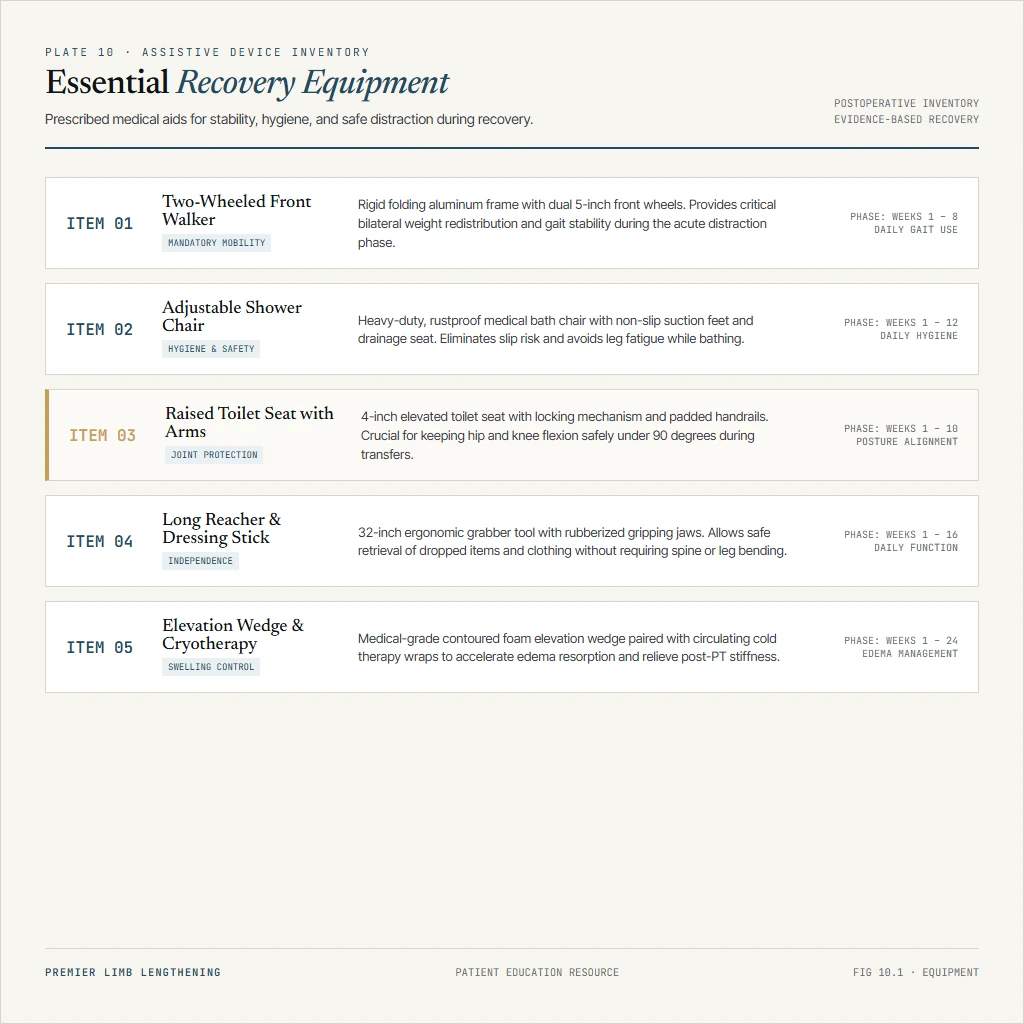
Dressing takes loose, easy clothing and a couple of dollar-store tools. A reacher or grabber, a long-handled shoehorn, and sock aids let you dress your lower half without bending or loading the leg. Lay out easy outfits ahead of time so you are not problem-solving on a hard day.
How do I get in and out of bed and sleep?
Sleep on whatever floor your bathroom is on for the first stretch. Getting in and out is easier from a bed at chair height, and many patients like a wedge or pillows to keep the leg supported and elevated early on.
How will I get around the house?
A walker is the workhorse early on, and some patients use a wheelchair for longer distances. As you progress, you move to crutches, then a cane, then walking unaided. Your recovery sets the pace.
What to buy before surgery
Setting the house up before surgery is the single best thing you can do for an easy first week. A starter list:
- Walker, and possibly a wheelchair for distance
- Raised toilet seat and bedside commode with arms
- Grab bars or a sturdy handhold near the toilet and shower
- Shower chair or transfer bench, handheld showerhead, and non-slip mat
- Reacher or grabber, long-handled shoehorn, sock aid
- A spot to keep everything on one level, with bed, bathroom, and kitchen access
- Easy meals prepped or stocked, with water and essentials within reach
Do I need a caregiver or an aftercare nurse?
Most patients do not need a live-in nurse, but you do want a helper for the first several days, especially for stairs, meals, and getting to early appointments. A partner, family member, or friend is usually enough. If you are traveling to us or live alone, our concierge team helps arrange near-clinic housing and can point you to private-duty care if you want an extra set of hands.
Common Questions
Patients also ask.
Yes, slowly and with a handrail, often with a helper for the first few days. Many patients plan to live on one level for the first week or two, then add stairs back as strength returns.
Use a raised toilet seat plus a grab bar, or a bedside commode with arms, so you lift yourself with your arms. Set it up before surgery. Most patients are independent quickly.
Usually not a live-in nurse, but plan for a helper for the first several days. A partner, family member, or friend is typically enough, and private-duty care is optional.
Sit on a shower chair or transfer bench, use a handheld showerhead and non-slip mat, and keep dressings dry as instructed until Dr. B clears getting the incisions wet.
Begin
None of this is as scary as it sounds from the outside. We walk you through it first.
With the house set up and a helper for the first few days, daily life during recovery is manageable, and it gets easier every week. Nothing about your first day home should be a surprise.